
Biography Biography Biography
- Home
- Biography
Early Life & Family Background
Born on 15 November 1875 in the small village of Ulihatu in present-day Jharkhand, Birsa Munda came from the proud and resilient Munda tribal community, known for its deep connection with nature, rich cultural traditions, and collective way of life. His parents, Sugna Munda and Karmi Hatu, were simple farmers who lived by cultivating land and forest resources, reflecting the self-sustained lifestyle of Adivasi society.
Birsa spent his childhood surrounded by lush forests, folk traditions, and tribal wisdom that valued freedom, dignity, and community harmony. However, he also grew up witnessing the growing oppression of British colonial rule, the forced occupation of ancestral land, and the exploitation of Adivasi families by landlords and missionaries. The painful reality of displacement, poverty, and social injustice left a deep mark on his young mind.
Despite limited access to formal education, Birsa was known for his sharp intellect, leadership qualities, and spiritual inclination from an early age. His experiences and observations shaped his belief that his people deserved land rights, respect, and the freedom to live according to their cultural identity. These early foundations became the spark that later ignited the historic Ulgulan Movement, making him a symbol of resistance and tribal pride.
Family Tree

Father
Sugna Munda
A hardworking farmer and respected member of the Munda community, Sugna Munda lived a life rooted in simplicity, dignity, and devotion to ancestral land. His values of integrity, resilience, and community service strongly shaped Birsa’s early character and leadership qualities.

Mother
Karmi Hatu
A nurturing and spiritually grounded mother, Karmi Hatu played a vital role in preserving the cultural values and traditions of the Munda community within the family. Her teachings of compassion, courage, and cultural pride deeply influenced Birsa’s emotional strength and spiritual outlook.

Siblings
Siblings & Companions
Birsa grew up alongside his siblings in a close-knit tribal family environment that encouraged unity and mutual support. Their shared struggles and experiences in a challenging social landscape helped build Birsa’s sense of responsibility and purpose toward his community.
Tribal Issues and Social Reform Initiatives
Birsa Munda dedicated his life to addressing the deep-rooted problems faced by Adivasi communities under British rule and oppressive landlord systems. He fought against forced labor (Begar), unfair land grabbing, exploitation by moneylenders, missionaries, and corrupt officials. Birsa emphasized reclaiming traditional land rights for indigenous tribes and launched movements to protect their cultural identity, forests, and livelihood.
- Fought against forced labor (Begar) and exploitation of tribal workers
- Opposed land grabbing by British zamindars and missionaries
- Advocated for restoration of traditional Adivasi land rights
- Resisted unfair taxes and forest laws imposed on indigenous tribes
The “Ulgulan” (Great Tribal Revolt)
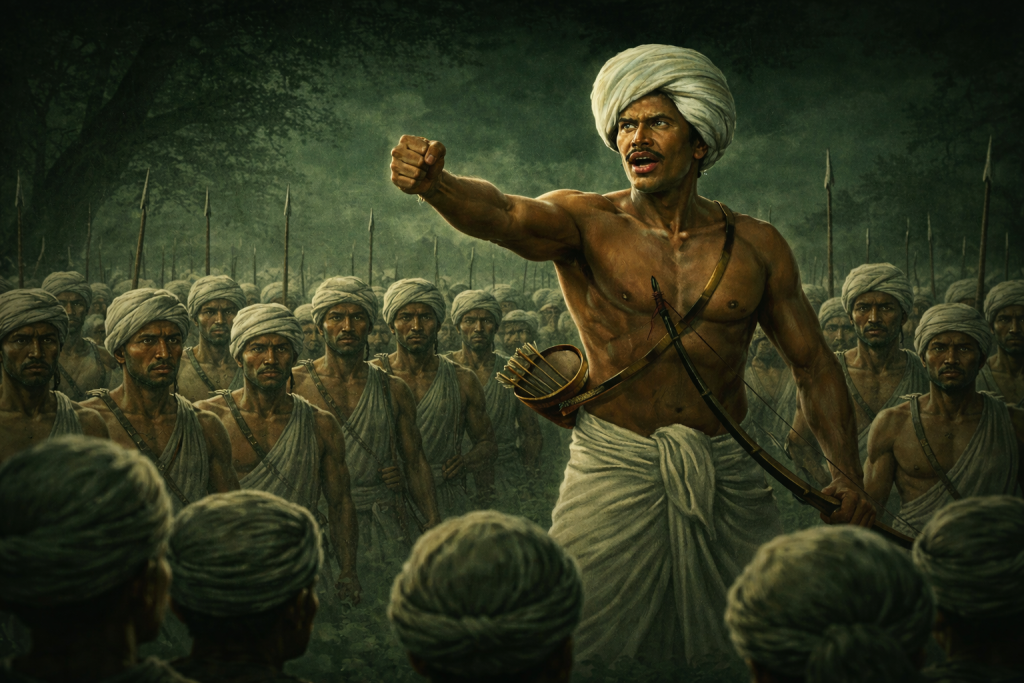
The Ulgulan, meaning “The Great Tumult” or Revolt, was a historic uprising led by Birsa Munda between 1899–1900 against British colonial rule and the oppressive feudal-zamindari system. It was one of India’s earliest and most powerful Adivasi resistance movements.
Birsa united thousands of tribal communities across the Chotanagpur region to reclaim their land, forest rights, and cultural identity. The movement directly challenged forced labor, illegal land seizures, missionary interference, high taxation, and British exploitation. Inspired by his spiritual leadership and revolutionary vision, people joined him with unmatched courage, believing in his call for “Abua Dishum, Abua Raj” — Our Land, Our Rule.
Though brutally suppressed and Birsa later captured, the Ulgulan shook the British regime and led to major changes, eventually influencing the Chotanagpur Tenancy Act, which legally protected tribal land rights. The revolt remains a timeless symbol of indigenous resistance, unity, and sacrifice.
Arrest
Birsa was arrested on 3 February 1900 after British forces launched a massive crackdown on the uprising. The authorities captured him near Jamkopai Forest, Chakradharpur, where he was hiding with a small group of supporters. His arrest was aimed at crushing the unity and rising political awareness among Adivasi communities. Despite his young age, his fearlessness and leadership deeply unsettled the colonial regime.
Martyrdom
While imprisoned in Ranchi Central Jail, Birsa died under mysterious circumstances on 9 June 1900, at just 25 years old. The official claim suggested illness, but most believe he was deliberately poisoned or tortured. His death turned him into an eternal symbol of resistance, inspiring generations of tribal families to continue the struggle for justice and dignity.
National Impact
The Ulgulan movement shook the foundations of British administration and forced major policy reforms protecting tribal land and identity. His sacrifice influenced the creation of future laws such as the Chotanagpur Tenancy Act, safeguarding indigenous land ownership. Today, he stands as a powerful national icon, inspiring tribal rights movements, constitutional protections, and social justice campaigns across India.