History History History
- Home
- History
Battle of Dombari Buru
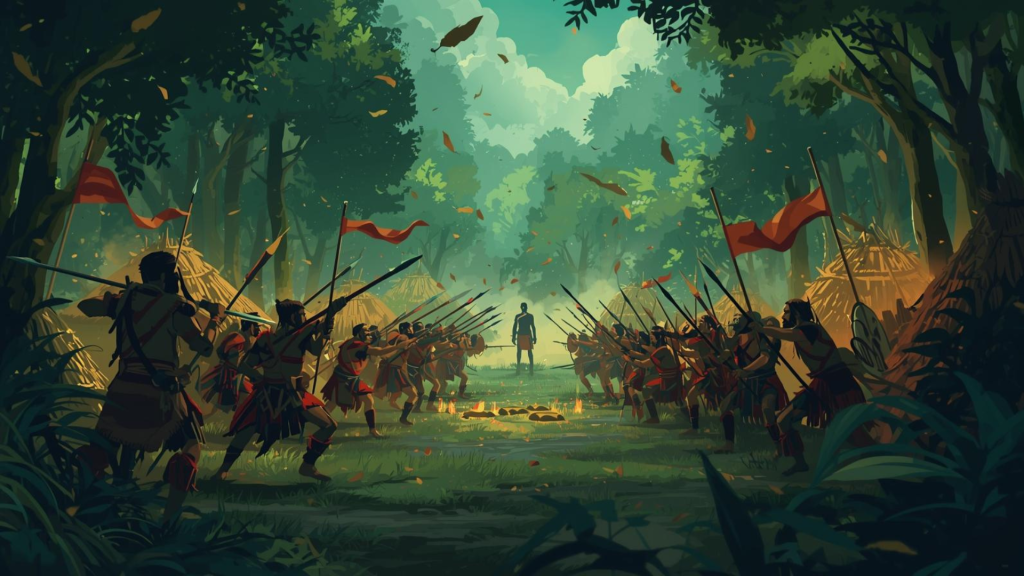
The Battle of Dombari Buru, fought in January 1900, was the most defining confrontation between Birsa’s followers and the British forces. Dombari Buru, a sacred hill near Tamar, Jharkhand, became the central rallying point where thousands of tribal men, women, and children gathered to assert their demand for freedom, land rights, and dignity. The British military, alarmed by the growing momentum of the Ulgulan movement, launched a brutal attack on the unarmed tribal crowd. Soldiers opened fire ruthlessly, killing hundreds on the spot. The hill turned into a battlefield of sacrifice and courage as the people refused to surrender despite heavy losses. This battle exposed the cruelty of British rule and strengthened the resolve of the Adivasi community. The fallen warriors at Dombari Buru became eternal symbols of bravery, inspiring rebellions and tribal rights movements long after the Ulgulan ended. Today, the site stands as a memorial to indigenous resistance and martyrdom.

Resistance at Sail Rakab & Pahan Toli
Another major moment of resistance occurred during the intense British crackdown in the areas surrounding Sail Rakab and Pahan Toli. British forces raided villages believed to support Birsa’s movement, attempting to destroy unity among the tribes. However, instead of surrendering, Birsa’s followers fought fearlessly using traditional weapons such as bows, arrows, axes, and spears, defending their land with unmatched courage. This confrontation demonstrated the strength of tribal unity and their readiness to sacrifice everything for self-rule and land protection. The attacks by the British intended to crush the morale of the revolutionaries but instead ignited greater determination within the community. Even with limited resources and no modern weaponry, the resistance proved that the spirit of freedom could not be controlled by military power. These battles intensified the momentum of the Ulgulan, inspiring more tribes to join the uprising.
Interaction with British Rule and Tribal Mobilization
Birsa Munda’s leadership was marked by a strong and strategic interaction with British colonial authorities. As British policies increasingly encroached on tribal lands, imposed heavy taxes, and disrupted traditional governance, Birsa recognized the urgent need for organized resistance. He spoke out against exploitation, forced labor (Begar), and illegal land grabs, warning colonial officials that the Munda people would not silently accept injustice.
Through his spiritual and reformist influence, Birsa mobilized thousands of Adivasis across Chotanagpur. He emphasized unity, cultural pride, and disciplined rebellion, blending spiritual awakening with political action. His followers were trained in self-defense, organized village councils, and coordinated uprisings, creating a mass movement that challenged British authority. This mobilization not only strengthened tribal identity but also inspired future generations to fight for land rights and social justice.